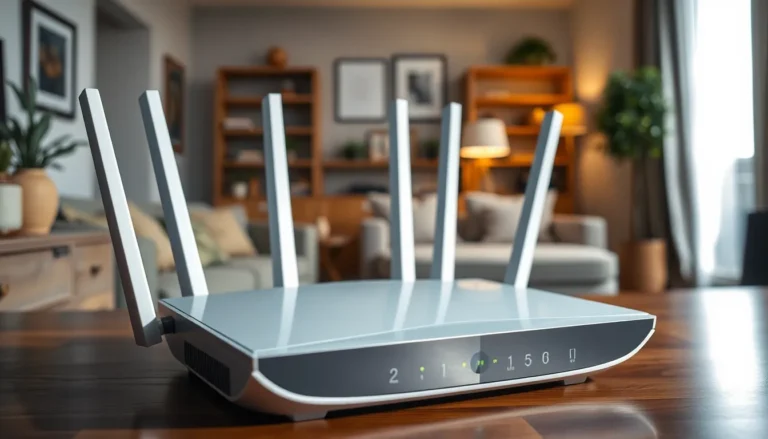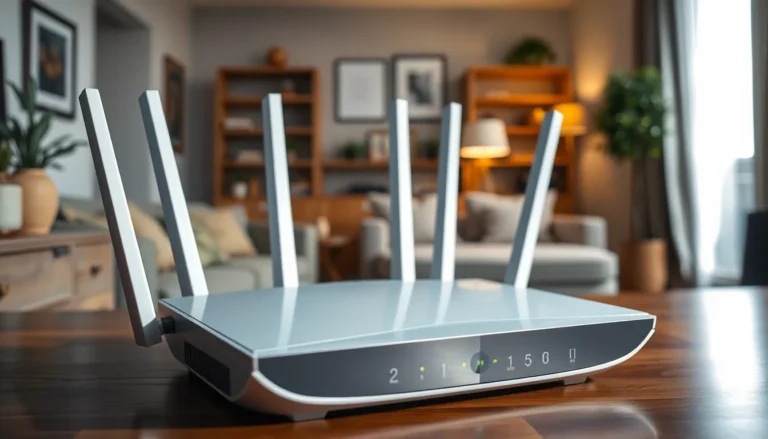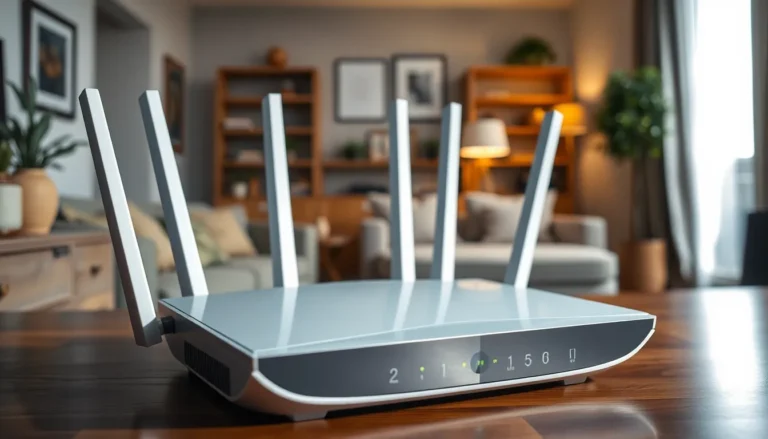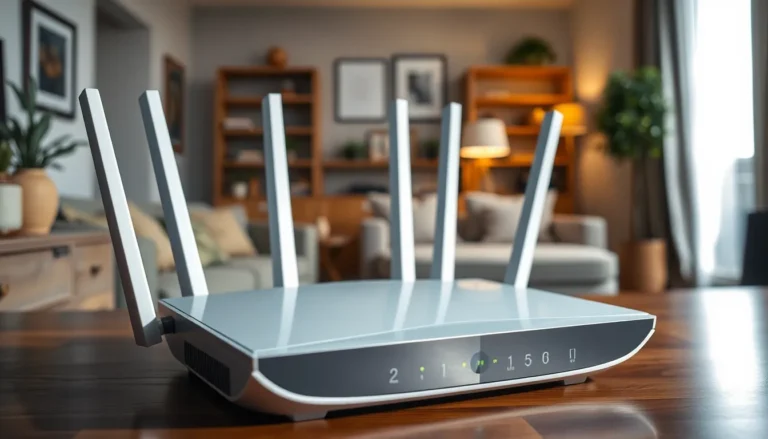

In today’s fast-paced digital world, a reliable internet connection isn’t just a luxury; it’s essential. Enter the dual-band router, the unsung hero of home networking. With its ability to operate on both the 2.4 GHz and 5 GHz bands, it’s like having a superhero sidekick that can tackle lagging video calls and buffering binge-watching sessions all at once.
Imagine streaming your favorite show while your kids game online without a hitch. Sounds like magic, right? But it’s just the dual-band router working its charm. This powerhouse not only boosts your Wi-Fi speed but also helps manage multiple devices seamlessly. So, if you’re tired of internet woes, it’s time to embrace the dual-band lifestyle and surf the web like a pro.
Overview of Dual-Band Routers
Dual-band routers enhance home and office networks by operating on two frequency bands: 2.4 GHz and 5 GHz. Each band serves distinct purposes, allowing users to choose the best option for their internet needs. The 2.4 GHz band penetrates walls effectively, making it ideal for devices located further from the router. This band supports longer ranges but typically offers lower speeds, which can impact performance when multiple devices connect simultaneously.
The 5 GHz band, on the other hand, provides faster speeds with less interference. Users experience higher bandwidth, which makes it particularly suitable for activities requiring more internet resources, such as streaming HD video or online gaming. Dual-band routers automatically balance devices between these two bands, optimizing performance for various applications.
Advanced routers also include features like Quality of Service (QoS). This technology prioritizes bandwidth for specific devices or applications, ensuring a seamless experience, even with many devices connected at once. For example, a user can prioritize gaming traffic over browsing to reduce latency.
Security measures in dual-band routers are crucial in today’s cyber threat landscape. These routers often offer WPA3 encryption, improving network security and protecting personal data. Configuration options enable users to set up guest networks, limiting access for visitors without compromising the main network’s integrity.
Dual-band routers provide flexibility and speed, adapting to users’ diverse internet needs. As more devices connect to home networks, the advantages of dual-band technology become increasingly important for maintaining reliable, fast internet access.
Benefits of Using a Dual-Band Router

Dual-band routers offer significant advantages for enhancing internet connectivity. These devices operate on both the 2.4 GHz and 5 GHz bands, optimizing performance for various online activities.
Improved Wi-Fi Performance
Improved Wi-Fi performance stems from the dual-band capability. The 5 GHz band supports higher speeds, making it ideal for bandwidth-intensive activities like video streaming and online gaming. Users consistently experience faster download and upload times when connected to this band. Meanwhile, the 2.4 GHz band provides better range, allowing devices positioned further away from the router to maintain a stable connection. Devices such as smartphones and smart home gadgets benefit from this arrangement. Having both bands enhances overall efficiency, ensuring a smoother online experience across multiple devices.
Reduced Interference
Reduced interference significantly boosts connectivity quality. The 5 GHz band operates on a less crowded frequency, minimizing disruptions from other electronics and neighboring networks. Fewer devices utilize this band, which leads to clearer signals. The 2.4 GHz band, while more prone to interference, still plays a vital role for devices located farther from the router. Users gain flexibility in choosing which band to connect based on their location and activity. This reduces lag times and improves loading speeds, especially when numerous devices are online simultaneously. Overall, dual-band routers effectively mitigate interference, resulting in more reliable connections.
Key Features to Consider
Choosing a dual-band router involves evaluating essential features that enhance performance and security.
Frequency Bands
Dual-band routers operate on two frequency bands: 2.4 GHz and 5 GHz. The 2.4 GHz band supports longer ranges, making it ideal for devices located farther from the router, such as smart home devices. Simultaneously, the 5 GHz band delivers faster speeds, which suits activities like streaming and gaming. Users can decide which band to connect to based on their needs. By utilizing both bands, dual-band routers reduce interference from other devices and optimize connectivity in busy environments.
Speed and Capacity
Speed and capacity are critical factors in selecting a dual-band router. Data transfer rates on the 5 GHz band can reach up to 1300 Mbps, providing ample bandwidth for high-demand tasks. As for the 2.4 GHz band, speeds usually peak at 450 Mbps, sufficient for everyday activities like browsing and email. Routers with higher capacity handle multiple devices simultaneously, ensuring smooth internet experiences even when connected to several gadgets. Both bands enhance performance, enabling users to maximize their home network’s efficiency.
Security Features
Security features significantly impact a dual-band router’s overall performance. Advanced protocols like WPA3 encryption safeguard user data and improve network security. This level of security defends against unauthorized access, particularly crucial for home networks with numerous connected devices. Additionally, features such as firewall protection and automatic updates enhance the router’s resilience to cyber threats. Overall, robust security measures create a safer online environment, allowing users to enjoy their internet experience with peace of mind.
Comparison with Single-Band Routers
Dual-band routers outperform single-band routers by offering both 2.4 GHz and 5 GHz bands. Speed plays a crucial role in performance; the 5 GHz band achieves data transfer rates up to 1300 Mbps, while the 2.4 GHz band generally peaks at 450 Mbps. Both bands provide advantages, such as longer range and better wall penetration in the 2.4 GHz band, making it suitable for devices farther from the router.
Interference and speed impact user experience. Single-band routers can become congested, especially when multiple devices connect simultaneously, leading to slower speeds. In contrast, dual-band routers efficiently manage device connections, allocating tasks to the appropriate band based on current demand.
Device compatibility differs between the two types as well. Single-band routers often lack the capability to prioritize various devices, while dual-band options utilize Quality of Service (QoS) features for this purpose. Users benefit from optimized bandwidth for streaming, gaming, and other high-demand tasks when using dual-band routers.
Security features in dual-band routers also outshine those of single-band routers. Enhanced protocols like WPA3 encryption help protect personal data on dual-band devices, ensuring a safer online experience.
Overall, dual-band routers cater to modern internet needs more effectively than single-band routers. Users with multiple devices, high-speed requirements, or a focus on security find that dual-band routers offer significant advantages, enhancing overall connectivity and performance.
Popular Dual-Band Router Models
Several dual-band router models stand out for their performance and features.
ASUS RT-AC68U offers tremendous throughput with 1900 Mbps combined speeds. This model includes advanced features like Adaptive QoS, enabling users to prioritize bandwidth for gaming and streaming.
Netgear Nighthawk RAX50 boasts Wi-Fi 6 technology, supporting speeds up to 4.2 Gbps. Users benefit from improved efficiency and a broader range, making this router ideal for extensive households.
TP-Link Archer A7 features speeds of up to 1750 Mbps and supports Alexa voice control. Affordability is a key trait, along with robust security using WPA2 encryption.
Linksys EA7300 excels with speeds up to 1.7 Gbps. It includes MU-MIMO technology, allowing multiple devices to connect simultaneously without lag, enhancing everyday performance.
D-Link DIR-882 presents an attractive option with dual-band speeds of 1900 Mbps. The model’s SmartConnect feature simplifies network management by directing devices to the best available band.
Google Nest Wifi integrates seamlessly with smart home setups. While it prioritizes ease of installation and setup, it also offers impressive coverage, reaching up to 4,400 square feet.
Netgear Orbi RBK50 sets itself apart with a mesh networking design. It covers large areas with consistent speeds up to 3 Gbps, effectively eliminating dead zones in expansive homes.
These routers exemplify the balance of speed, range, and ease of use required for today’s internet demands. Each model demonstrates unique features that cater to diverse user needs, ensuring consumers find options that align with their requirements.
Investing in a dual-band router can significantly enhance internet connectivity and overall online experiences. With the ability to operate on both 2.4 GHz and 5 GHz bands, these routers provide flexibility for various devices and activities. Users can enjoy faster speeds for streaming and gaming while maintaining stable connections for everyday tasks.
The advanced features found in many dual-band routers, such as QoS and WPA3 encryption, further elevate their value. They not only optimize performance but also ensure a secure browsing environment. As digital demands continue to grow, choosing a dual-band router becomes a smart decision for anyone looking to improve their home or office network.